Online learning has made education accessible to everyone. From coding and data science to design and marketing, thousands of free courses are available at your fingertips. Yet, most learners start strong and quietly quit halfway.
The problem isn’t a lack of quality courses.
The real challenge is not knowing how to learn effectively online.
The good news? Learning is a skill — and like any skill, it can be improved.
In this guide, we’ll break down how to learn faster, retain more information, and complete free online courses using proven learning techniques. You don’t need expensive tools or paid programs — just the right approach and the free resources available on TopFreeCourse.com.
Understanding How Online Learning Really Works
Before choosing courses or platforms, it’s important to understand how learning happens.
Online learning is mostly self-directed, which means:
You control the pace
You manage the schedule
You are responsible for revision and practice
Unlike classrooms, there are no reminders, no exams, and no pressure. Without a system, motivation fades quickly.
Successful learners don’t rely on motivation — they rely on learning strategies.
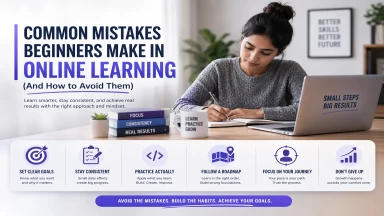
Step 1: Set a Clear Learning Goal
Most people fail before they even begin because their goal is vague.
Bad goal:
“I want to learn programming”
Clear goal:
“I want to understand HTML and CSS well enough to build a simple website in 30 days”
Before starting any free course, ask yourself:
What exactly do I want to learn?
How will I know I’ve learned it?
Where will I apply this skill?
TopFreeCourse.com helps by categorizing courses by skill, level, and format so you can choose with intention instead of confusion.
Step 2: Choose One Course, Not Ten
Free platforms offer unlimited options — and that’s dangerous.
Jumping between multiple courses leads to:
Incomplete learning
Shallow understanding
Burnout
Pick one primary course and commit to finishing it before starting another.
You can always explore later, but completion builds confidence and momentum.
Step 3: Use Active Learning Instead of Passive Watching
Watching videos alone feels productive, but it doesn’t build strong memory.
Active learning means:
Pausing videos frequently
Writing answers in your own words
Explaining concepts out loud
Solving small problems immediately
After every lesson, ask:
What did I just learn?
Can I explain this without notes?
Some courses on TopFreeCourse.com that include quizzes, exercises, or practice tasks help reinforce this habit naturally.
Step 4: Apply Spaced Learning for Better Retention
Cramming doesn’t work for long-term learning.
Spaced learning means revisiting topics over time instead of all at once.
A simple structure:
Day 1: Learn a new topic
Day 3: Quick revision
Day 7: Practice or summarize
Day 21: Final recall
This technique strengthens memory and reduces the need to re-learn topics again and again.
Step 5: Take Notes the Right Way
Copying paragraphs is not learning.
Effective notes should:
Be short
Use simple language
Be written as questions and answers
Example:
What is this concept?
Why is it used?
Where can I apply it?
Many learners pair free video courses with downloadable PDFs and text-based resources available on TopFreeCourse.com to build cleaner, more useful notes.
Step 6: Practice by Teaching
One of the most powerful learning techniques is teaching what you learn.
You don’t need an audience. You can:
Write a short explanation in your notes
Record a voice note
Explain it to a friend
Post a short LinkedIn summary
If you can explain a topic simply, you truly understand it.
Step 7: Track Consistency, Not Perfection
Learning online is about showing up regularly, not being perfect.
Instead of tracking hours, track:
Days studied
Lessons completed
Topics revised
Even 30–45 minutes daily is enough if done consistently.
Many learners use simple checklists or calendars alongside free courses from TopFreeCourse.com to stay accountable.
Step 8: Review and Apply What You Learn
At the end of a course:
Review key concepts
Identify gaps
Apply the knowledge to a small project or task
Application turns information into skill.
Whether it’s a mini project, practice exercise, or case study, applying learning makes it stick.
Final Thoughts
Free courses give you access.
Learning strategies give you results.
If you combine the right learning techniques with high-quality free courses, you can build real skills without spending money or feeling overwhelmed.
Online learning isn’t about speed — it’s about direction, consistency, and clarity.
Explore structured, beginner-friendly free courses on TopFreeCourse.com, learn smarter, and finally finish what you start.