What is the Model Context Protocol (MCP)?
Model Context Protocol, commonly known as MCP, is an emerging open standard designed to enable seamless, structured interaction between different AI models, tools, and platforms. In an era where artificial intelligence (AI) and machine learning (ML) systems are increasingly integrated into various sectors, MCP offers a standardized way to describe the context in which a model operates, enhancing interoperability, transparency, and functionality.
At its core, MCP introduces a common language for exchanging metadata, prompt information, environmental variables, and behavioral intentions. Whether it’s a simple question-answering bot or a complex multi-modal AI system, MCP ensures that the system understands the context of the task, the user, and the data involved.
How Does MCP Work?
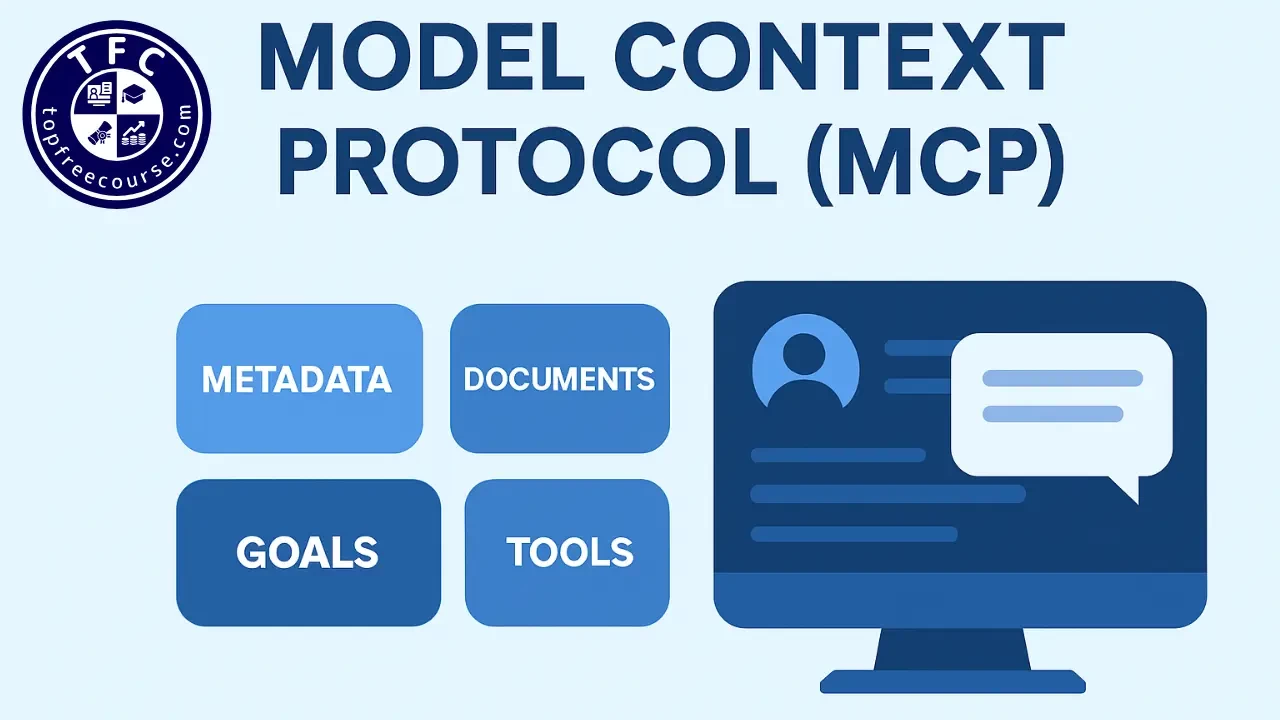
Model Context Protocol works as a metadata layer between the user, tools, and AI models. Instead of just passing raw text or inputs to an AI, MCP defines a structured format to carry additional information, such as:
-
The identity and role of the user (e.g., student, developer, analyst)
-
The purpose of the task (e.g., generate code, write content, analyze data)
-
Model configuration and history
-
Security and ethical constraints
-
Tool preferences or plug-in dependencies
This approach brings several benefits, including reproducibility, debuggability, and traceability. MCP enables modular model interaction where each step in a chain of tools or models can interpret the shared context and respond appropriately.
Key Components of MCP
-
User Context
The user context defines who is interacting with the model and under what conditions. This includes user roles, preferences, skill levels, and access permissions. For example, a beginner asking a technical question may receive a simplified response, while an advanced user might receive in-depth explanations.
-
Task Context
Every model interaction has a purpose—MCP captures this using a structured task context. It can specify whether the model should summarize, translate, generate code, or evaluate a piece of content. This enables models to dynamically adjust their tone, style, and behavior.
-
Environment Context
The environment includes the software, hardware, and tool-specific settings involved in the model’s operation. For instance, if the model is integrated with a design tool, coding IDE, or spreadsheet, MCP can describe the environment so the model can function more effectively within it.
-
Model Context
MCP allows models to disclose their capabilities, limitations, and configurations. This is especially useful in multi-agent setups, where multiple models collaborate. It also helps maintain transparency by allowing systems to audit or explain decision paths.
-
Session Context
Continuity in interactions is crucial. MCP enables memory-like behavior by carrying session context—what was asked before, what responses were given, and what the user might expect next. This creates a more natural and fluid experience.
Why Is MCP Important?
-
Cross-Model Interoperability
In a growing ecosystem of specialized AI models, MCP makes it easier for different models or agents to communicate and work together. Think of it as a universal translator for AI tools.
-
Standardization and Governance
MCP lays the groundwork for responsible AI development. By standardizing context sharing, it ensures that AI behaviors are auditable, replicable, and less prone to bias or error due to context misinterpretation.
-
Improved AI User Experience
With MCP, the AI can better understand the nuances of user input and respond in a way that feels intelligent, relevant, and context-aware. This leads to more accurate answers, reduced hallucinations, and higher satisfaction.
-
Modular and Scalable AI Systems
As companies and developers build more complex AI workflows, MCP simplifies integration. Developers can create modular components that “speak MCP,” making it easier to plug and play capabilities without re-engineering entire systems.
Real-World Applications of MCP
-
AI-Powered Customer Support
Customer service chatbots often struggle with maintaining context over multiple turns. With MCP, the chatbot can retain and interpret session context, prioritize tasks, and tailor tone based on user emotion or sentiment.
-
Education and Tutoring Systems
In educational apps, the user context (student level, subject, learning goals) and task context (solve, explain, quiz) can significantly impact the kind of help an AI tutor offers. MCP ensures the AI adjusts its guidance accordingly.
-
Creative Writing and Content Generation
Writers using AI for content creation can benefit from the task context (e.g., write a blog, edit a novel, summarize a report). MCP enables AI tools to stay on tone, remember style preferences, and maintain logical flow.
-
AI-Driven Research and Analysis
Analysts using AI to explore data or research literature need tools that remember what has been analyzed, filter based on relevance, and evolve based on new goals. MCP structures that context to keep AI responses aligned.
-
Healthcare Assistants
In healthcare, context is critical. An AI model assisting a doctor needs to know whether it’s being asked to summarize, diagnose, or explain. MCP ensures compliance with ethical, legal, and domain-specific rules.
Benefits of MCP
-
Consistency Across Tools: By standardizing metadata, the experience remains consistent across different AI applications.
-
Enhanced Model Accuracy: Better context leads to more accurate, relevant responses.
-
Transparency and Accountability: MCP makes it easier to debug AI behavior and ensure ethical practices.
-
Efficient Multi-Model Systems: Multiple models or agents can collaborate more effectively using a shared protocol.
-
Future-Proof AI Infrastructure: As models grow in capabilities, MCP allows seamless upgrades and extensions without starting from scratch.
Challenges and Limitations
-
Adoption Across Platforms
While MCP promises a universal language for context, it will only succeed if widely adopted by AI providers, developers, and platforms.
-
Complex Implementation
Structuring and maintaining context data can increase development complexity, especially for smaller teams.
-
Privacy and Security
More context means more data, and that data could include sensitive information. Strong safeguards are needed to protect user data.
-
Evolving Standards
MCP is still an emerging protocol. As it evolves, backward compatibility and versioning will become critical to prevent fragmentation.
Career Opportunities in MCP Ecosystem
-
AI Prompt Engineers
These professionals define structured task and user contexts, fine-tuning how models interpret prompts and respond intelligently.
-
MCP Protocol Developers
Developers working directly with the protocol help define, implement, and standardize components across systems and companies.
-
Context Architects
A cross-disciplinary role, context architects design and manage large-scale context frameworks to integrate MCP into complex systems.
-
AI Toolchain Integrators
These engineers are responsible for embedding MCP-aware models into existing tools like CRMs, IDEs, and BI platforms.
-
Ethical AI Auditors
With MCP, tracking decision logic becomes easier, opening roles focused on compliance, governance, and ethical evaluations.
Conclusion
Model Context Protocol is redefining how AI systems understand and respond to humans. In a future where AI will be ubiquitous, MCP provides the much-needed structure to ensure these systems are intelligent, ethical, and functional across different environments. By enabling modular, context-rich, and interoperable interactions, MCP sets the foundation for the next wave of responsible and scalable AI development.
Whether you're an AI developer, a content creator, or a business strategist, understanding and adopting MCP will help you build smarter, safer, and more impactful AI applications.