Introduction :
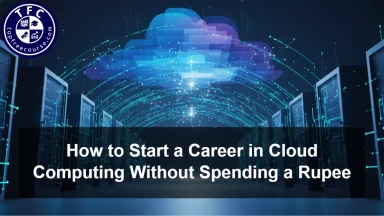
By now, cloud technology is skyrocketing. From streaming unlimited entertainment to knowledge and work, from managing data to software updates cloud technology works behind the scenes every ware. In this time of the technological typhoon, Cloud Technology entered the picture and almost 90% of businesses shifted to it. Cloud technology has accelerated, the momentousness of cloud engineering is very high in Demand and the job opportunities have re-timed momentum. This blog will discuss the fundamentals of cloud computing, like Google Cloud (GCP) and Amazon Web Services (AWS), and how to become a cloud engineer.
What is a Cloud Engineering?
Cloud Technology provides services for data storage, data analytics, and different software accessible through the internet. Cloud Technology uses engineering concepts to develop system infrastructure, manage data applications, and help employees perform like machine learning and artificial intelligence. As businesses continuously rely on cloud technology, to manage their systems cloud engineers work behind the scenes and the cloud computing field is rising aggressively. This modern roadmap is specially designed to navigate the learning enthusiast of cloud technologies, our platform provides hand-picked, top-notch cloud computing courses all available for Free!
Different Opportunities After Learning Cloud Engineering
Demand for professional cloud engineers is very high. As a cloud engineer, these job opportunities are waiting for you.
1. Cloud Architect
Cloud Architects build an infrastructure on the cloud technology platforms. They implement different strategies, tactics, and architecture in cloud technology for organizations and help them to migrate to it.
2. Cloud Engineer
Cloud Engineers manage technological tasks, have a deeper understanding of programming languages, and are proficient in advanced database systems. They implement the cloud system without interruption and manage, monitor, and maintain it.
3. Cloud Security Engineer
Cloud security engineers help organizations build cloud security systems and provide a safe, secure environment. They have a deep understanding of cloud platforms, security technologies, and risk management, and they identify and reduce security risks
4. Cloud Administrator:
As a cloud administrator, you will be responsible for the company's cloud presence and infrastructure. You will be responsible for setting up security protocols and policies, automation, and monitoring & troubleshooting.
5. DevOps Cloud Engineer
DevOps Cloud Engineers have immeasurable knowledge of the IT sector. They are responsible for the deployment and management of the cloud, supervise security testing as well as analyze the cloud architecture, and work as a bridge between development and operations teams.
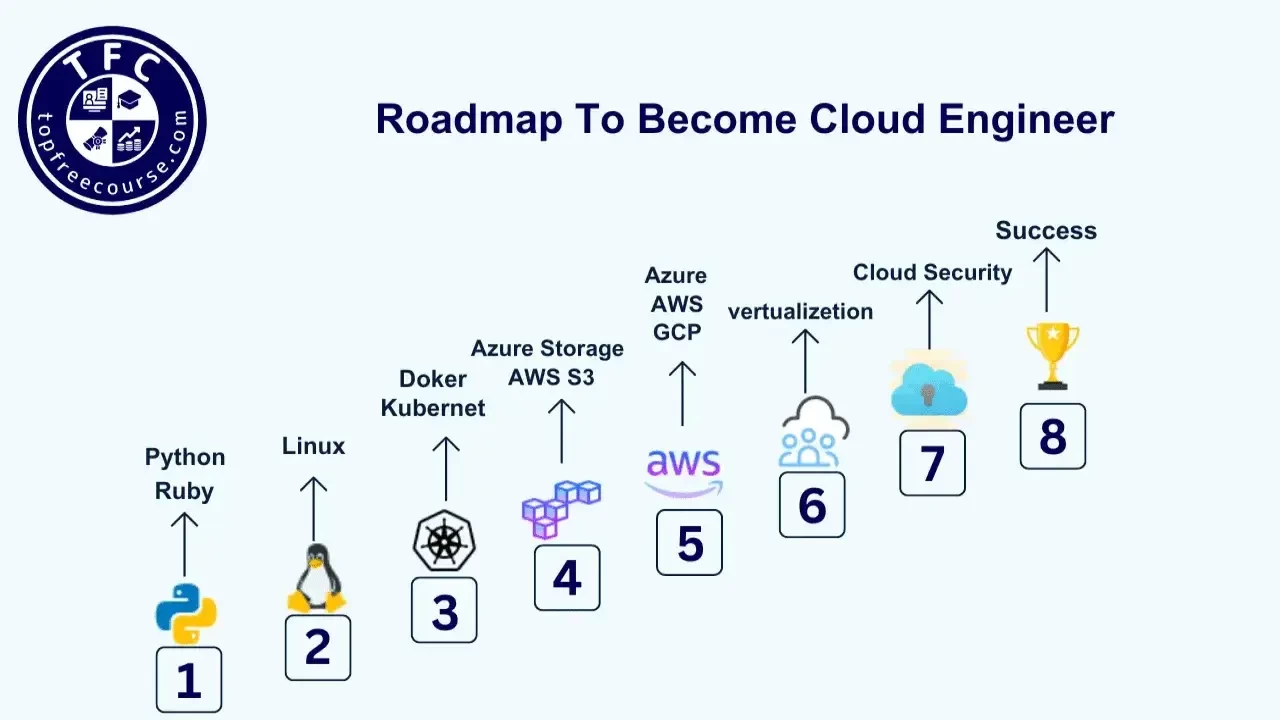
Cloud Engineering Learning Roadmap
Learn the fundamentals of Cloud Technology with our comprehensive modern roadmap. Delve into our high-quality FREE courses for Cloud engineering.
1. Earn a Bachelor’s Degree
Having a bachelor's degree in computer science is a great way to characterize yourself from the competition. Learning fundamentals of cloud computing skills and pursuing cloud computing certification is an addition to the resume.
2. Gain efficiency in a Cloud Computing Platform
To become a cloud engineer you should be proficient in at least one cloud computing platform like AWS, Azure, or GCP. For basic understanding start your learning journey with cloud computing courses online, watch YouTube videos, or join offline classes and get certified in cloud computing platforms.
3. Be Proficient in Programming
A good understanding of data-oriented programming languages like Python, Java, and Ruby is required more in cloud computing. A solid understanding of Databases, operating systems like Linux, and knowledge of networking is necessary to become a cloud engineer.
4. Explore Cloud Services
Delve into cloud services like virtual machines, databases, and containers. Understand networking concepts like PVC, Subnets, and Load Balancers. Learn cloud security and containers like Doker and Kubernetes.
5. Specializing
After Understanding cloud Platforms you should learn storage and networking like AWS S3 and Azure Storage in Microsoft Azure, Security, Disaster Recovery, Web Services, and Development operations are provided by the cloud platforms.
6. Internships
Internships are the best way to experience real-life projects in related industries. It will enhance your skills and give you the confidence for your first job.
Learning Path by Different Free Courses
Enhance your skills in Cloud Engineering with our best cloud courses without spending money. Start learning for FREE Now!!!
1 . Google Cloud Computing Foundation Course
Course Link : https://topfreecourse.com/course/details/172-google-cloud-computing-foundation-course
Description : You will learn the fundamentals of cloud computing, big data, and machine learning, tailored for those with little experience. Through hands-on training on the Qwiklabs platform, you'll reinforce your understanding and gain practical skills, discovering how the Google Cloud Platform fits into the broader landscape of cloud computing. Perfect for beginners seeking a detailed and immersive introduction to these essential concepts.
2. Google Cloud Fundamentals: Core Infrastructure
Course Link : https://topfreecourse.com/course/details/170-google-cloud-fundamentals-core-infrastructure
Description : You will learn to Identify the purpose and value of Google Cloud products and services. Define how infrastructure is organized and controlled in Google Cloud Explain how to create a basic infrastructure in Google Cloud Select and use Google Cloud storage options.
3. HarvardX: CS50's Web Programming with Python and JavaScript
Course Link : https://topfreecourse.com/course/details/18-harvardx-cs50s-web-programming-with-python-and-javascript
Description : With this course, you will understand complete web programming with Python and you will learn JavaScript, HTML, CSS, Git, Python, Django, SQL, Models, and Migrations, JavaScript, User Interfaces, Testing, CI/CD, Scalability and Security.
4. Cloud Computing: The Technical Essentials
Course Link : https://topfreecourse.com/course/details/167-cloud-computing-the-technical-essentials
Description : You will understand the building blocks of Cloud: Virtualization, Networking, Storage, Cryptography, etc. Understand what a Cloud is and how the Cloud is Defined, Understand the Deployment models of the Cloud and the Service models of Cloud.
5. Configuration Management and the Cloud
Course Link : https://topfreecourse.com/course/details/171-configuration-management-and-the-cloud
Description : Understand the benefits of configuration management and infrastructure as code
Create and maintain containers with Docker and Kubernetes to create efficient and safe application deployment, Automatically deploy new virtual machines running in the Cloud
Deploy changes safely following CICD principles.
6. Managing Security in Google Cloud
Course Link : https://topfreecourse.com/course/details/177-managing-security-in-google-cloud
Description : Identify the foundations of Google Cloud security. Manage administration identities with Google Cloud. Implement user administration with Identity and Access Management (IAM). Configure Virtual Private Clouds (VPCs) for isolation, security, and logging.
Conclusion
Cloud Engineer is the most demanding job profile in this decade. Today most businesses adopt cloud technologies to manage their systems and dependent on data. More and more companies have provided capital for cloud computing services, and to solve the computing problems cloud engineers play a crucial role.
Kickstart your career as a cloud engineer, we will guide you through all the necessary information. Top Free Cours provides world-class cloud computing courses online for FREE!
Frequently Asked Questions (FAQs)
Yes, cloud engineering is one of the most in-demand and high-paying tech careers in 2025. As businesses migrate to the cloud, professionals skilled in AWS, Azure, or GCP are highly sought after globally.
A cloud engineer is an IT professional who designs, develops, manages, and maintains cloud-based systems and infrastructure. They work with platforms like AWS, Microsoft Azure, and Google Cloud to ensure scalable and secure cloud environments for businesses.
Absolutely! Cloud engineering roles are highly suited for remote work. Many companies hire remote cloud professionals via platforms like Toptal, Remote OK, and Stack Overflow Jobs due to the cloud’s distributed nature.
Cloud engineers mostly use Python, Bash, and Go for automation and scripting. Understanding Java or Node.js is also helpful when working with cloud-based applications and serverless functions.
To become a cloud engineer in 2025, essential skills include cloud platforms (AWS, Azure, GCP), Linux, networking, Python or Bash scripting, DevOps tools (Terraform, Docker, Jenkins), and cloud security fundamentals.
The best certifications for cloud engineers include AWS Certified Solutions Architect – Associate, Microsoft Certified: Azure Administrator, Google Associate Cloud Engineer, and CompTIA Cloud+, These showcase your expertise and improve job prospects.
Cloud engineers use tools like Terraform for infrastructure as code (IaC), Docker and Kubernetes for containerization, Jenkins or GitHub Actions for CI/CD, CloudWatch, Datadog, or Prometheus for monitoring cloud infrastructure.
Yes, platforms like TopFreeCourse.com offer curated free cloud engineering courses. You can also learn from AWS Training & Certification, Google Cloud Skills Boost, and Microsoft Learn—all of which offer hands-on labs and tutorials for beginners.